
Why Holistic Well-Being Is The Foundation Of Learning
Updated: Jun 26
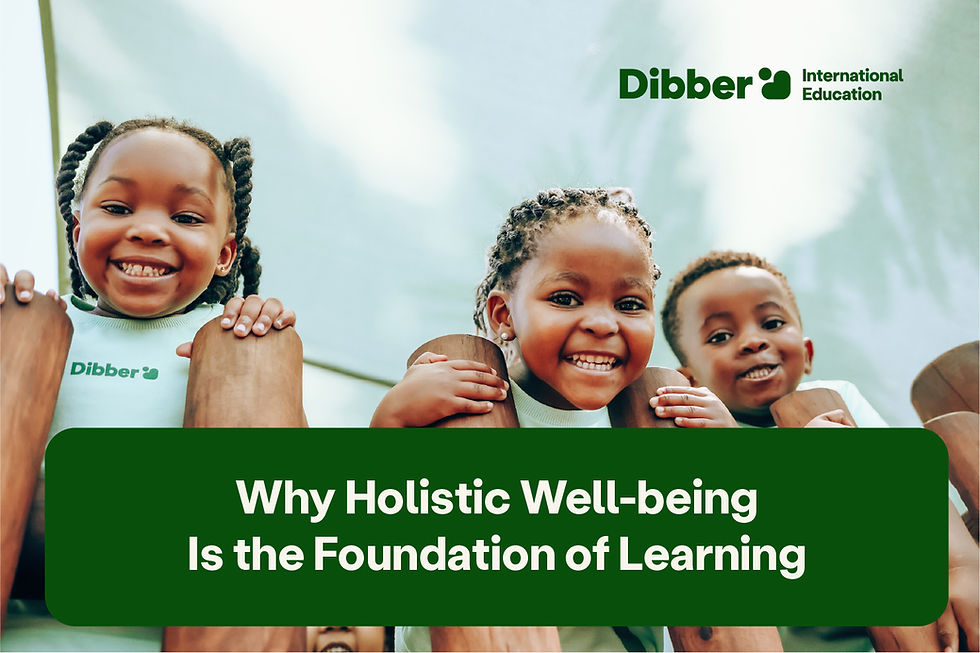
If you have ever handed your child an expensive educational toy only for them to spend the next 30 minutes happily playing with the cardboard box instead, you already understand an important truth about early childhood. Young children learn best when they feel curious, engaged, safe, and free to explore.
The early years are not only about learning numbers, colours, and letters. Between the ages of 1 and 6, children are also developing emotional security, confidence, communication skills, creativity, and social awareness. This is why holistic well-being in early childhood plays such a vital role in learning and development.
Children thrive when their emotional, physical, social, and cognitive needs are supported together. In many ways, well-being is not separate from education. It is what allows meaningful learning to happen.
Emotional Security Supports Learning
Young children are deeply affected by their environment and emotional experiences. When children feel anxious, overwhelmed, or unsettled, it becomes more difficult for them to focus, participate, and absorb new information.
Research in child development consistently highlights the connection between emotional well-being and cognitive growth. Children who feel safe and supported are more likely to explore, ask questions, and engage confidently in learning experiences.
This is why holistic well-being in early childhood goes beyond physical care. It includes emotional support, stable relationships, consistent routines, creative expression, movement, and a sense of belonging. A nurturing environment helps children develop confidence and emotional resilience from an early age.
Sometimes, simple moments have the greatest impact. A calm response during a difficult moment or a reassuring conversation can help children feel secure enough to regulate emotions and continue learning positively.
Play Is An Essential Part Of Development
Play is often viewed as a break from learning, but for young children, play is one of the most effective ways to learn.
Through play, children develop communication skills, creativity, problem-solving abilities, coordination, and emotional understanding. Building with blocks, role-playing, drawing, exploring outdoors, or engaging in sensory activities all contribute to healthy development.
Studies continue to show that play supports brain development during the early years, which is why play-based education remains such an important part of holistic well-being in early childhood.
At Dibber, we encourage children to learn through exploration, relationships, movement, and meaningful experiences. Instead of focusing only on academic achievement, the approach supports the development of confident, curious, and emotionally secure children.
Because when children enjoy learning, they are naturally more engaged in the process.
Social & Emotional Skills Develop Early
The early years are also when children begin developing important social and emotional skills. Learning how to share, communicate needs, manage frustration, and build friendships all happen gradually through everyday experiences.
These moments may sometimes look chaotic, especially during the toddler years, but they are valuable opportunities for growth.
Holistic well-being in early childhood includes helping children understand emotions and respond to social situations in healthy ways. When children receive patient guidance and emotional support, they are more likely to develop empathy, confidence, and positive relationships with others.
Strong emotional skills also help children adapt more comfortably to structured learning environments later in life.
Movement Supports Cognitive Growth
Young children learn through movement. Running, climbing, balancing, dancing, and outdoor play all contribute to physical, emotional, and cognitive development.
Physical activity supports concentration, coordination, confidence, and emotional regulation. Active children are often more engaged and responsive during learning experiences because movement helps stimulate brain development.
This is another important reason why holistic well-being in early childhood includes opportunities for regular movement and outdoor exploration. Young children are not designed to remain seated for long periods. They benefit most from environments that allow them to move, explore, and interact freely with the world around them.
Outdoor play also encourages independence, creativity, and sensory development, all of which support overall learning.
Relationships Shape A Child’s Learning Experience
One of the strongest influences on a child’s development is the quality of their relationships with caring adults.
Children thrive when they feel heard, respected, and emotionally connected to parents, caregivers, and educators. Positive relationships create a sense of safety that allows children to explore confidently and participate actively in learning experiences.
This is why holistic well-being in early childhood places strong emphasis on connection and emotional support alongside academic growth. Children are more likely to develop confidence and resilience when they feel accepted and encouraged.
At Dibber, our Engaged EducatorsTM create nurturing environments where children are supported through meaningful interactions, guided exploration, and play-based learning experiences.
Because before children can thrive academically, they first need to feel that they belong.
Holistic Well-Being: The Foundation To Early Childhood Development
Parents often feel pressure to focus heavily on academic milestones during the early years. However, meaningful learning begins with emotional security, connection, movement, curiosity, and confidence.
This is the true value of holistic well-being in early childhood. It supports not only academic readiness but also emotional resilience, social development, creativity, and a lifelong love for learning.
When children feel safe, supported, and encouraged, they naturally become more curious about the world around them.
And that strong foundation stays with them long after the early years are over.


Comments