
7 Ways Early Childhood Education Influences Decision-Making In Adulthood

Did you know that nearly 90% of a child’s brain develops before the age of five?
Research consistently shows that early experiences shape neural connections that influence learning, behaviour, and health for years to come. These formative years are not simply a preparatory phase for school. They are a critical window where the foundation for lifelong development is established.
This is where the early childhood education impact becomes both significant and measurable. High-quality early education supports not only academic readiness but also emotional resilience, social awareness, and independent thinking. It creates an environment where children are encouraged to explore, question, and grow with confidence.
Stages Of Childhood Development
Childhood development unfolds in stages, each marked by rapid changes in how children think, communicate, and interact with their surroundings. Understanding these stages helps educators and caregivers create experiences that are aligned with children’s developmental needs.
Infancy (0 to 2 years): Sensory exploration, attachment building, and early communication
Toddlerhood (2 to 3 years): Language expansion, mobility, and growing independence
Preschool years (3 to 5 years): Social interaction, imaginative play, and early problem-solving skills
Each stage also brings variations in attention span and engagement levels, which directly influence how children learn best. Structuring activities that match these patterns can significantly enhance learning outcomes. To explore this further, read attention levels in early childhood.
Cognitive Growth & Brain Development
Early childhood education plays a vital role in strengthening cognitive abilities. During these years, the brain forms connections at an extraordinary rate, making it highly responsive to stimulation.
Through activities such as storytelling, music, puzzles, and guided play, children develop:
Language and communication skills
Memory retention and recall
Logical thinking and reasoning
Early numeracy and literacy abilities
A stimulating environment ensures that these connections are not only formed but reinforced, creating a strong base for future academic success.
Social Skills & Emotional Intelligence
Learning to interact with others is a crucial part of early development. Early childhood education provides children with opportunities to engage in group settings where they learn cooperation, empathy, and respect.
Children begin to:
Understand and express their emotions
Build friendships and navigate social situations
Develop patience and conflict resolution skills
Gain a sense of belonging and security
These experiences contribute to emotional intelligence, which plays a key role in overall well-being and future relationships.
Independence & Decision-Making
One of the most valuable aspects of early education is the development of independence. When children are encouraged to make choices and take initiative, they begin to trust their abilities.
Simple actions such as selecting an activity, completing a task, or expressing preferences help children:
Build confidence
Develop responsibility
Strengthen problem-solving skills
Cultivate a sense of ownership over their learning
At Dibber, the Nordic curriculum is designed to be child-centred, allowing children to actively participate in their learning journey. It encourages independence by enabling children to make small yet meaningful decisions in their classrooms, helping them grow into self-assured individuals.
Learning Through Play & Exploration
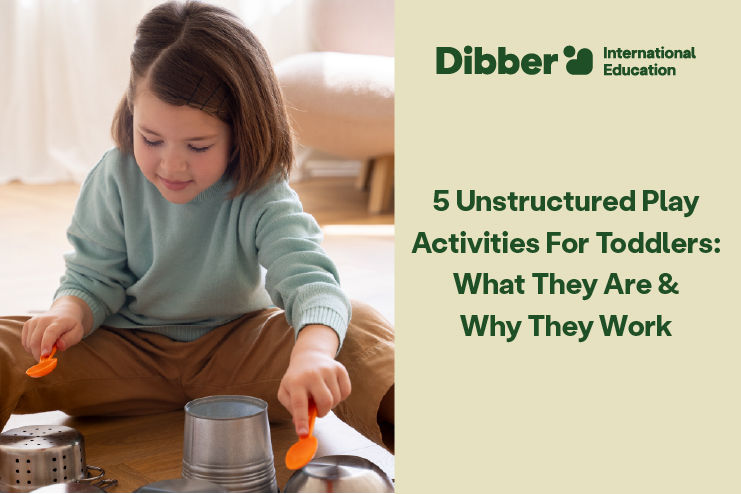
Play is an essential component of early education and serves as a powerful medium for learning. It allows children to experiment, imagine, and discover in a natural and engaging way.
Through play-based learning, children:
Enhance creativity and imagination
Improve physical coordination and motor skills
Practice communication and collaboration
Develop critical thinking abilities
Structured and unstructured play both contribute to holistic development, making learning both effective and enjoyable.
Long-Term Impact & Lifelong Learning
The benefits of early childhood education extend far beyond the early years. Studies show that children who receive quality early education are more likely to perform well academically, demonstrate better social behaviour, and adapt effectively to new environments.
They are also more likely to:
Exhibit strong self-regulation skills
Maintain curiosity and a love for learning
Approach challenges with confidence
Build meaningful relationships throughout life
The early childhood education impact is not limited to immediate outcomes. It creates a ripple effect that influences an individual’s personal and professional journey for years to come.
Conclusion
Early childhood education shapes more than just academic readiness. It nurtures the children, supports emotional well-being, and builds the foundation for independent and confident individuals.
With the right guidance, environment, and curriculum, children are empowered to explore their potential and develop essential life skills. Dibber’s child-centred Nordic approach ensures that children are not only learning but also actively participating in their growth through thoughtful choices and meaningful experiences.
In these early years, every moment matters. When nurtured with intention and care, those moments come together to shape a future filled with possibility.


Comments