
5 Unstructured Play Activities For Toddlers: What They Are & Why They Work
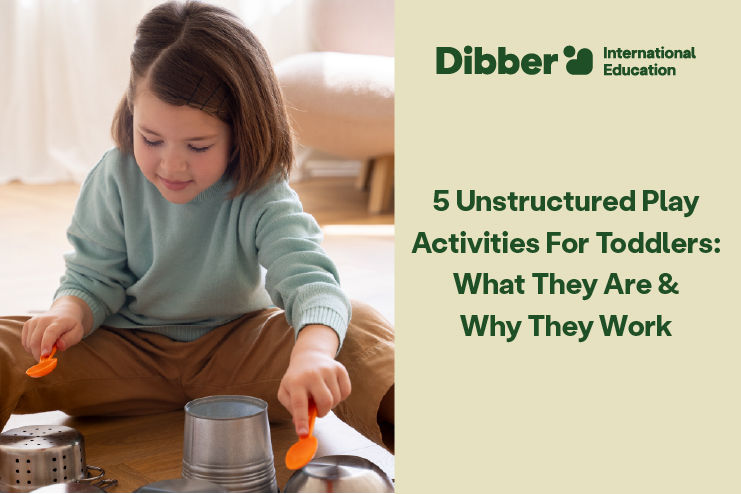
There's a moment every parent knows well. You've just set up the most elaborate craft activity (glitter, stickers, the works) and your toddler completely ignores it. Instead, they're banging a wooden spoon on a pot and absolutely loving life.
Here's the thing: that pot-banging session? That is the activity. And it might be doing more for your child's development than anything you planned.
Let's talk about unstructured play activities for toddlers: what they actually are, why they matter so much, and five easy ways to make room for them in your everyday routine.
So, What Is Unstructured Play, Exactly?
Unstructured play is child-led, open-ended, and free from adult direction. There's no goal, no right or wrong way to do it, and no outcome to aim for. Your toddler decides what to play, how to play it, and when they're done.
It's the opposite of structured activities like puzzles with specific solutions, guided art projects, or organised games with rules.
In South Africa, where many children grow up with open yards, communal spaces, and rich imaginative traditions, unstructured play often happens naturally. But as screen time increases and schedules get busier, it's worth being intentional about creating space for it.
Why The Benefits Of Unstructured Play For Toddlers Are A Big Deal
When toddlers play freely, their brains are doing a remarkable amount of heavy lifting. Experts consistently say that unstructured play builds problem-solving skills, emotional regulation, creativity, and physical confidence. All without a single flashcard in sight.
It also gives toddlers a sense of autonomy. At an age where so much is decided for them (what to eat, when to sleep, where to go), unstructured play hands the control back. That sense of agency matters more than most parents realise.
Early childhood educators at places like Dibber International Preschools often speak about how child-led play is one of the most powerful tools in early development. Not despite being "just play," but because of it.
5 Easy Unstructured Play Activities For Toddlers
1. Sensory Bins: No Instructions Required
Fill a large container with dry lentils, sand, dried pasta, or even water. Add some cups, spoons, and random objects. Then step back.
Sensory bins are a favourite in South African homes because the materials are affordable and easy to find. Your toddler will pour, dig, sort, and experiment entirely on their own terms. They're building fine motor skills and exploring cause and effect, but from their perspective, they're just having a fantastic time making a mess.
2. Loose Parts Play In The Garden
This one costs nothing. Collect sticks, stones, leaves, seed pods, and bits of bark from your garden or local park. Place them in a pile and let your toddler do whatever they want with them.
They might build, sort by size, create a "soup," or simply carry things around. There's no wrong answer. Loose parts play encourages open-ended thinking and imaginative construction in a way that pre-designed toys often can't match.
3. Water Play: In Any Form
A bucket, a bowl, a hosepipe in the garden on a warm Highveld afternoon. Water play is unstructured gold.
Toddlers will splash, transfer water between containers, and test what floats or sinks for as long as you'll let them. It's calming, engaging, and deeply satisfying for them. Add old kitchen utensils, plastic bottles, or sponges and watch the concentration kick in.
4. Cardboard Box Play
Before you break down that grocery delivery box, hand it to your toddler first. A cardboard box becomes a car, a house, a cave, or a spaceship depending entirely on your child's imagination.
You don't need to suggest anything. Grab a crayon and offer it if you like, then let them take it wherever they want. This kind of imaginative, open play is one of the most powerful unstructured play activities for toddlers because it exercises creative thinking in its purest form.
5. Free Drawing And Mark-Making
Put some paper on the floor (the bigger the better), offer crayons or washable paint, and leave the room (metaphorically speaking). No colouring-in books, no templates, no "draw a house."
Free drawing lets toddlers express what's going on internally. It develops grip strength, hand-eye coordination, and early literacy foundations. Most importantly, it's entirely theirs.
The Best Thing You Can Do? Get Comfortable Doing Nothing
The hardest part of unstructured play for parents is resisting the urge to jump in, redirect, or improve on what your toddler is doing. But boredom is not the enemy. It's often where the best play begins.
So, the next time your toddler wanders off and starts doing something completely random with a cardboard tube and a pile of cushions, take a breath. Pour yourself a cup of tea. And trust that they've got this.
Because they absolutely do.


Comments